
Pharmacy Residency Programs
The Detroit Medical Center (DMC) Departments of Pharmacy Services have been training pharmacy residents since 1981 and are committed to providing high quality postgraduate training in contemporary hospital pharmacy practice. The programs are designed to meet each resident’s individual needs and assist them in attaining their personal and professional goals. Each DMC hospital offers unique opportunities for pharmacists who desire advanced training in pharmacy practice in a variety of settings. The Post Graduate Year One (PGY1) pharmacy residency programs emphasize all aspects of clinical and pharmacological management in adult and pediatric patients. The Post Graduate Year Two (PGY2) pharmacy residency programs contribute to the development of clinical pharmacists in specialized areas of practice.
DMC Pharmacy Residency Mission Statement:
The mission of the Pharmacy Residency Programs at the Detroit Medical Center is to assist residents in transitioning from entry-level to advanced or specialty-trained practitioners in the health-system environment and becoming professionals who optimize medication use for individual patients and specific patient populations. The DMC advances the professional practice level and knowledge base of the resident through a progression of experiences tailored to their individual needs.
About Pharmacy Residency Programs

The Detroit Medical Center Departments has been nationally recognized five times: twice receiving the American Society of Health-System Pharmacists (ASHP) Best Practices Award (2013 and 2018), twice receiving the ASHP Foundation Pharmacy Residency Excellence – New Preceptor of the Year Award (2015 and 2016), and once receiving the American Association of Colleges of Pharmacy (AACP) Master Preceptor Award (2018). The Department of Pharmacy prides itself on training the next generation of pharmacy leaders and clinicians through their ASHP accredited residency programs.
Other awards and recognitions for DMC preceptors:
| Award / Recognition | Recipient(s) |
| ACCP Board of Regents (2023-2026) | Candice Garwood, PharmD, FCCP, BCPS, BCACP |
| SMSHP Preceptor of the Year (2020) | Marco Scipione, Pharm.D. |
| Wayne State University College of Pharmacy Warrior Preceptor of the Year (2019) | Jesse Shuster, PharmD, BCPS |
| SMSHP Pharmacist of the Year (2018) | Ryan Mynatt, PharmD, BCPS-ID |
| Detroit Receiving Hospital Employee of the Year (2018) | Mike Palazzolo, R.Ph |
| ASHP Best Practices Award (2018) | HATRIX Group: Joshua Raub, PharmD, BCPS; Ray Yost, PharmD, Sean McConachie, PharmD, BCPS; Taylor Franckowiak, Pharm.D.; David Trupiano, PharmD; Ken Risko, RPh, MBA |
| SMSHP Innovative Practice Award (2018) | HATRIX Group: Joshua Raub, PharmD, BCPS; Ray Yost, PharmD, Sean McConachie, PharmD, BCPS; Taylor Franckowiak, Pharm.D.; David Trupiano, PharmD; Ken Risko, RPh, MBA |
| Michigan Society of Health-System Pharmacist (MSHP) Presidents Award (2018) | HATRIX Group: Joshua Raub, PharmD, BCPS; Ray Yost, PharmD, Sean McConachie, PharmD, BCPS; Taylor Franckowiak, Pharm.D.; David Trupiano, PharmD; Ken Risko, RPh, MBA |
| SMSHP Exemplary Resident CE Lecture (2018) | Alison Lobkovich, Pharm.D. |
| American Association of Colleges of Pharmacy (2018) Master Preceptor Award | Joanne MacDonald, Pharm.D. |
| SMSHP Exemplary Resident CE Lecture (2017) | Janet Wu, Pharm.D. |
| ASHP Residency Excellence: New Preceptor Award (2016) | Joshua N. Raub, PharmD, BCPS |
| SMSHP Resident of the Year (2016) | Insaf Mohammad, PharmD |
Centers for Disease Control and Prevention (CDC) Childhood Immunization Champion (2016) | Cheryl A. Szof, BS, RPh |
Michigan Pharmacists Association Innovative Pharmacy Practice Award (2016) | Candice Garwood, PharmD, FCCP and Rosa Parks Geriatric Clinic |
SMSHP Pharmacist of the Year (2015) | Elizabeth Petrovitch, PharmD, BCPS |
ASHP Residency Excellence: New Preceptor Award (2015) | Suprat Saely Wilson, PharmD, BCPS |
Employee of the Year (2015) | Ryan Mynatt, PharmD, BCPS, AQ-ID |
SMSHP Pharmacist of the Year (2014) | Joshua N. Raub, PharmD, BCPS |
EACPHS Faculty of the Year (2014) | Dennis Parker Jr, PharmD |
Michigan Governor's Award for Senior Health (2014) | Candice Garwood, PharmD, FCCP |
ASHP New Investigator Research Grant Award (2013) | Leah Steinke, PharmD and Mike Rybak, PharmD, MPH, FCCP, FIDSA |
SMSHP Preceptor of the Year (2012) | Carrie Molesa, PharmD, BCPS |
EACPHS LAPP Preceptor of the Year (2013, 2012) | Joshua N. Raub, PharmD, BCPS |
SCCM Research Citation Award (2012) | Krista Wahby, PharmD |
The PGY1 pharmacy residency programs at the Detroit Medical Center (DMC) are conducted at Children’s Hospital of Michigan, Detroit Receiving Hospital, Harper-Hutzel Hospital and Sinai-Grace Hospital. One of the benefits of the PGY1 residency programs at the DMC is the ability of the resident to participate in learning experiences at all hospitals in the system.
The DMC is committed to providing high quality postgraduate training in contemporary hospital pharmacy. The one year ASHP accredited program emphasizes all aspects of clinical and pharmacologic management and expert members of the healthcare team serve as preceptors in all learning experiences. As part of the health care team, pharmacists actively participate in patient rounds, analyze drug therapies, and provide up-to-date pharmacotherapeutic data. They are the medication experts for patients, physicians, nurses, and other health care professionals.
PURPOSE
The purpose of the ASHP accredited PGY1 Pharmacy Residency Program is to build upon Doctor of Pharmacy (PharmD) education and outcomes to develop pharmacist practitioners with knowledge, skills, and abilities as defined in the educational competency areas, goals, and objectives. Residents who successfully complete PGY1 residency programs will be skilled in diverse patient care, practice management, leadership, and education, and be prepared to provide patient care, seek board certification in pharmacotherapy (i.e., BCPS), and pursue advanced education and training opportunities including postgraduate year two (PGY2) residencies.
ORGANIZATION
Each PGY1 residency program is governed by the Pharmacy Residency Expectations document approved by the DMC Residency Steering Committee (RSC). There is a residency program director at each site, who is an active member of the RSC and who oversees and manages the residents.
Contact Information
| Children’s Hospital of Michigan | Detroit Receiving Hospital | Harper-Hutzel Hospital | Sinai-Grace Hospital |
| Hillary (Jones) Rademacher, PharmD, BCPPS PGY1 Program Director Email: [email protected] or [email protected] Positions: 2 | Mark Pangrazzi, PharmD, BCCCP | Jesse Shuster, Pharm.D., BCPS PGY1 Program Director Email: [email protected] Positions: 3 - 4 | Stephanie Beachnau, Pharm.D. PGY1 Program Director Email: [email protected] Positions: 2 |
- How is your program structured?
All DMC pharmacy residency programs are ASHP accredited. The PGY1 pharmacy residency programs are conducted at Children’s Hospital of Michigan, Detroit Receiving Hospital, Harper-Hutzel Hospital and Sinai-Grace Hospital. Every PGY1 & PGY2 residency program is governed by the Pharmacy Residency Expectations document approved by the DMC Residency Steering Committee (RSC). There is a residency program director at each site, who is an active member of the RSC and who oversees and manages the residents.
- What are your core and elective learning experiences?
PGY1: At a minimum, core learning experiences are defined as follows: orientation, pharmacy administration, medication use management, infectious diseases, research, one critical care, and either internal medicine or general pediatrics. In addition, 75% of the residency year must be completed at the matched site, so required learning experiences may vary slightly depending on the site. Residents must spend two thirds or more of the program in direct patient care activities, i.e. at least 8 one month or 32 weeks of 6 week long learning experiences, and no more than one-third may deal with a specific disease state and patient population (e.g. critical care, ambulatory care, infectious diseases). All PGY1 residents are required to complete at least one learning experience at an alternate DMC site.
- Does your residency offer a teaching certificate program?
All DMC pharmacy residents have the opportunity to participate in a teaching certificate program offered through the Wayne State University Eugene Applebaum College of Pharmacy and Health Sciences. The program is longitudinal and progresses through the majority of the residency year.
- What additional educational opportunities do you offer to your residents?
Pharmacy Residents at the DMC are required to attend weekly Pharmacy Grand Rounds, a system-wide forum for continuing education (CE) for students, residents, and pharmacists as well as other members of the healthcare team. Residents will present a 1 hour CE presentation in this venue. In addition, each site requires residents to participate and present formal journal clubs and/or case presentations. All residents will have opportunities to both attend and present at ASHP Midyear Clinical Meeting and Regional Pharmacy Residency meetings.
- Do residents have opportunities to precept?
Yes, DMC pharmacists serve as preceptors to students from several colleges, including Wayne State University Eugene Applebaum College of Pharmacy and Health Sciences and University of Michigan College of Pharmacy. Residents (in conjunction with preceptors) will have opportunities to precept pharmacy students throughout the year.
- What PGY2 specialty residencies are offered at Detroit Medical Center?
We offer PGY2 specialty residence programs in ambulatory care, critical care, emergency medicine, and infectious diseases.
- How many residents do you accept every year?
Each hospital accepts as follows: Children’s Hospital of Michigan – 2 PGY1, Detroit Receiving Hospital – 3 PGY1, Harper-Hutzel Hospital – 3 PGY1, Sinai-Grace Hospital – 2 PGY1.
PYG2 programs are all for a single individual. - How long are your learning experiences?
Each learning experience is 1 calendar month in length.
- How often are residents required to staff?
Residents are required to work shifts for the Pharmacy Departments, either in a satellite and/or central pharmacy, or on a clinical assignment.
- Holidaysa: PGY1 and PGY2 residents are required to work two holiday shifts per year, as assigned by the scheduling manager or designee. Residents will be paid overtime for the holiday shifts worked.
- Weekend Staffingb: PGY1 and PGY2 residents are required to work two shifts every third weekend, with a cumulative total of 32 shifts completed prior to the end of the residency year. Should the resident's holiday shift(s) fall on their previously designated weekend to work, these shifts are not counted towards the total weekend shift commitment.
- Supplemental Staffingb:
PGY1 and PGY2 residents are required to work a total of 72 hours of supplementary staffing, based on the needs of their specific Pharmacy Department. These hours can be worked as additional weekend shifts, day or afternoon shifts, 4 hour, 6 hour or 8 hour shifts, or any combination that complies with the need of their department, as long as resident duty hours are not violated. Afternoon shift orientation training and afternoon holiday shifts are not included in the 72 hour requirement.
aPGY2 Ambulatory Care residents will meet the same hours of coverage listed above, with the exception of holiday coverage, since ambulatory clinics are closed on holidays. The weekend/staffing requirements will be completed through central pharmacy, clinical, and transitions of care assignments.
bCHM follows a modified model. The requirement for CHM PGY1 residents is two weekend shifts every other to every third weekend, with a cumulative total of 37 shifts completed prior to the end of the residency year. Additionally, 32 hours of supplementary staffing is required.
- What is the application process?
Required application materials include the PhORCAS application, letter of intent, three letters of recommendation submitted through PhORCAS, official pharmacy school transcripts and curriculum vitae. Each DMC site will be listed under the hospital name in PhORCAS. The application deadline is January 2.
How is the resident evaluated?
We utilize PharmAcademic for all evaluations.- Do residents from each site collaborate on a regular basis?
Yes. All residents meet on a monthly basis at Residency Forum. Each forum is devoted to a different topic pertinent to residents (e.g. CV writing, statistical analysis, BPS Certification, etc). Forum also provides residents an opportunity to gather, discuss upcoming events, and share experiences. Additionally, residents have opportunities to take learning experiences at other DMC sites (based on preceptor availability).
- Which visas are not accepted by your hospital?
The DMC currently does not accept applicants with H1B or F1 visa status.
The Detroit Medical Center offers Emergency Medicine Residency program based at Detroit Receiving Hospital. The DMC is committed to providing high quality postgraduate training in contemporary emergency medicine pharmacy practice.
Purpose
The Emergency Medicine PGY2 Pharmacy Residency Program is to build upon Doctor of Pharmacy (PharmD) education and PGY1 pharmacy residency training to develop pharmacist practitioners with knowledge, skills, and abilities as defined in the ASHP educational competency areas, goals, and objectives for advanced practice in emergency medicine. Residents who successfully complete PGY2 residency programs are prepared for advanced patient care or other specialized positions, and board certification in emergency medicine.
Contact Information
Rachel Wein, Pharm.D., BCPS
PGY2 Emergency Medicine Pharmacy Residency Program Director
Email: [email protected]
The Detroit Medical Center (DMC) offers a PGY2 Critical Care Pharmacy Residency program based at Detroit Receiving Hospital and University Health Center (DRH/UHC). The DMC is committed to providing high quality postgraduate training in contemporary Critical Care pharmacy practice.
Purpose
The Critical Care PGY2 Pharmacy Residency builds upon Doctor of Pharmacy (PharmD) education and PGY1 pharmacy residency training to develop pharmacist practitioners with knowledge, skills, and abilities as defined in the ASHP educational competency areas, goals, and objectives for advanced practice in critical care. Residents who successfully complete this residency program are prepared for advanced patient care or other specialized positions, and board certification in critical care.
Contact Information
Adalah Yahia, PharmD, BCCCP
PGY2 Critical Care Residency Program Director
Email: [email protected]
| Chinyere Anyanwi, PharmD Manager, Pharmacy Services Learning experience(s) Offered: Pharmacy Administration Pharmacy School: University of Southern Nevada Practice/Area(s) of Interest: administration/leadership, coaching, medication therapy management Practice Site: Children’s Hospital of Michigan Email: [email protected] | William Arthur, R.Ph. Clinical Transformation Specialist-Pharmacy Learning experience(s) Offered: Pharmacy Informatics Pharmacy School: Wayne State University (1985) Practice/Area(s) of Interest: Electronic Medical Record and Practice Integration Practice Site: Detroit Medical Center Email: [email protected] | Troada Bastounis, PharmD Coordinator, Investigational Drug Services PGY1 Pharmacy Residency Coordinator Learning experience(s) Offered: Orientation, General Pediatrics Pharmacy School: Wayne State University (2000) Practice/Area(s) of Interest: investigational drug services, gene therapy Practice Site: Children’s Hospital of Michigan Email: [email protected] |
| Stephanie Beachnau, Pharm.D. Clinical Pharmacist Specialist, Maternal / Infant Health, PGY1 Residency Program Director Learning experience(s) Offered: Neonatal Intensive Care Unit Orientation Pharmacy School: Ferris State University (2006) Training(s): Pharmacy Practice Residency (2006-2007) – Children's Hospital of Michigan, Detroit, MI Practice/Area(s) of Interest: Neonatal, immunizations, pediatrics, labor and delivery/postpartum Practice Site: Sinai-Grace Hospital Email: [email protected] | Helen Berlie, BHS, Pharm.D., CDE, BCACP Clinical Associate Professor of Pharmacy Practice, Wayne State University; Ambulatory Care Specialist, Health Centers of Detroit Medical Group Learning experience(s) Offered: Diabetes Ambulatory Care Pharmacy School: Wayne State University Training(s): Fellowship, 2 years in Diabetes Practice/Area(s) of Interest: Diabetes, Global Health Practice Site: Health Centers of Detroit in University Health Center and Jefferson Avenue Office Email: [email protected] | Mirjana Lulic-Botica PharmD, BCPS Neonatal Clinical Pharmacy Specialist Learning experience(s): Neonatal Intensive Care Pharmacy School: BSPharm (WSU 1995), Pharm D (ISU) Practice/Area(s) of Interest: neonatal pharmacology, pharmacokinetics, parenteral/enteral nutrition, placental drug transfer, med safety Practice Site: Hutzel Women's Hospital Email: [email protected] |
| Rebecca Daniel, PharmD Clinical Pharmacist Specialist, Internal Medicine Learning experience(s) Offered: Internal Medicine Pharmacy School: University of Michigan (2013) Training(s): PGY1 Pharmacy Residency (Corewell Royal Oak 2014) Practice/Area(s) of Interest: Anticoagulation, Diabetes, Antimicrobial Stewardship Practice Site: Sinai-Grace Hospital Email: [email protected] | Paul Dobry, Pharm.D. Clinical Pharmacist Specialist, Drug Information Learning experience(s) Offered: Medication Use Management Pharmacy School: Wayne State University Training(s): Health Outcomes Research Fellowship – Ascension St. John Hospital and Wayne State University, Detroit, MI Practice/Area(s) of Interest: drug information, formulary management, medication safety, medication use policy, clinical practice guideline development, anticoagulation Practice Site: Detroit Receiving Hospital Email: [email protected] | Candice Garwood, Pharm.D, FCCP, BCPS, BCACP Clinical Pharmacy Specialist Ambulatory Care, Harper Hutzel Hospital PGY2 Ambulatory Care Residency Program Director Clinical Professor Wayne State University Learning experience(s) Offered: Geriatric Ambulatory Care Training: PGY1 Residency Ambulatory Care St. Louis College of Pharmacy Practice/Area(s) of Interest: Geriatrics, Anticoagulation Practice Site: Rosa Parks Geriatric Center Email: [email protected] |
| Justine S. Gortney, PharmD, BCPS Director of Assessment, Division of Pharmacy Associate Professor (Clinical) of Pharmacy Practice Learning experience(s) offered: Academia Practice Site: Wayne State University Email: [email protected] | Kelly Holzhausen, Pharm.D. Clinical Pharmacist Specialist, Neonatal Critical Care Learning experience(s) Offered: Neonatal Intensive Care Unit Pharmacy School: University of Michigan (2002) Training(s): PGY1 Pharmacy Residency (2002-2003) – Sinai-Grace Hospital, Detroit, MI Practice/Area(s) of Interest: Neonatal Critical Care Practice Site: Children’s Hospital of Michigan Email: [email protected] | Alex Huang, PharmD Clinical Pharmacist Specialist, Infectious Diseases Learning experience(s) Offered: Pediatric Infectious Diseases Pharmacy School: University of California, San Francisco Training(s): PGY1 Pharmacy Residency (2021-2022) – Detroit Receiving Hospital, MI; PGY2 Infectious Diseases Residency (2022-2023) – Detroit Receiving Hospital, MI Practice/Area(s) of Interest: Infectious Diseases, Antimicrobial Stewardship, Pharmacokinetics/Pharmacodynamics, Transplant Infectious Diseases Practice Site: Children’s Hospital of Michigan Email: [email protected] |
| Hillary (Jones) Rademacher, PharmD, BCPPS Clinical Pharmacist Specialist, Drug Information Services PGY1 Pharmacy Residency Program Director Learning experience(s) Offered: Medication Use Management, Orientation Pharmacy School: Wayne State University (2015) Training(s): PGY1 Pharmacy Residency (2015-2016) – Children’s Hospital of Michigan, Detroit, MI Practice/Area(s) of Interest: formulary management, medication safety, immunizations Practice Site: Children’s Hospital of Michigan Email: [email protected] | Kyle (K.C.) Mangan, Pharm.D. Clinical Pharmacist Specialist, Emergency Medicine Learning experience(s) Offered: Emergency Medicine Pharmacy School: Wayne State University (2016) Training(s): PGY1 Pharmacy Residency (2016-2017) – Medical University of South Carolina, SC; PGY2 Critical Care Residency (2017-2018)– Detroit Receiving Hospital & University Health Center, Detroit, MI Practice/Area(s) of Interest: Advanced Cardiac Life Support, toxicology Practice Site: Sinai-Grace Hospital Email: [email protected] | Marissa Mariani, Pharm.D. Director, Pharmacy Services, Detroit Receiving Hospital Learning experience(s) Offered: Pharmacy Administration Pharmacy School: Wayne State University (2003) Training(s)/Experience: Clinical Pharmacist (2003-2008) - Harper-Hutzel Hospital; Pharmacy Coordinator (2008-2012) - Harper-Hutzel Hospital Practice/Area(s) of Interest: Administration/Management; Controlled Substances; Investigational Drug Studies; Compliance Practice Site: Detroit Receiving Hospital Email: [email protected] |
Lynette Moser, Pharm.D. | Kyle P. Murray, Pharm.D., BCPS Director, Pharmacy Services, Harper-Hutzel Hospital Learning experience(s) Offered: Pharmacy Administration Pharmacy School: Wayne State University (2011) Training(s): Pharmacy Practice Residency (2011-2012) – Harper-Hutzel Hospital/Detroit Medical Center, Detroit, MI Practice/Area(s) of Interest: Productivity, Information Services, Pharmacy Purchasing Practice Site: Harper-Hutzel Hospital Email: [email protected] | Stacy Otremba, Pharm.D. Clinical Pharmacist Specialist, Surgical Intensive Care Learning experience(s) Offered: Surgical Intensive Care Pharmacy School: Wayne State University (2012) Training(s): Pharmacy Practice Residency (2012-2013) – Sinai-Grace Hospital, Detroit, MI; PGY-2 Critical Care Residency (2013-2014) – Detroit Receiving Hospital & University Health Center, Detroit, MI Practice/Area(s) of Interest: Traumatic brain injury, sepsis, blood products, analgesia/sedation, pharmacokinetics of obesity & critical illness Practice Site: Sinai-Grace Hospital Email: [email protected] |
| Linda A. Park, Pharm.D., BCPS Clinical Pharmacy Specialist, Critical Care Medicine Learning experience(s) Offered: Critical Care Medicine Pharmacy School: Ferris State University (2001) Training(s): Pharmacy Practice Residency (2001-2002) – Harper-Hutzel Hospital, Detroit, MI; PGY-2 Pharmacotherapy Residency (2002-2003) – Harper-Hutzel Hospital, Detroit, MI Practice/Area(s) of Interest: Sepsis, Acute Respiratory Distress Syndrome, Analgesia and Sedation, Pulmonary Embolism, Resident education Practice Site: Detroit Receiving Hospital & University Health Center Email: [email protected] | Dennis Parker Jr., Pharm.D. Associate Professor Pharmacy Practice Eugene Applebaum College of Pharmacy and Health Sciences; Clinical Pharmacist Specialist, Neurocritical Care Learning experience(s) Offered: Neurocritical Care Pharmacy School: University of Michigan (1998) Training (s): Pharmacy Practice Residency (1998-1999) – Detroit Receiving Hospital, Detroit, MI; Practice/Area(s) of Interest: Neurotrauma, stroke, critical care Practice Site: Detroit Receiving Hospital & University Health Center Email: [email protected] | Patricia A. Rayner, Pharm.D., BCOP Clinical Pharmacist Specialist, Pediatric Bone Marrow Transplant Learning experience(s) Offered: Pediatric Hematology/Oncology Pharmacy School: University of Michigan (2005) Training(s): Pharmacy Practice Residency (2005-2006) – William Beaumont Hospital Royal Oak, MI; PGY-2 Oncology Residency (2006-2007) – Karmanos/Harper-Hutzel Hospital Detroit, MI Practice/Area(s) of Interest: Bone marrow transplant, hematologic malignancies, graft-versus-host disease, veno-occlussive disease Practice Site: Children's Hospital of Michigan Email: [email protected] |
| Paulina Reizian, Pharm.D. Clinical Pharmacist Specialist, Pediatric Hematology-Oncology Learning experience(s) Offered: Pediatric Hematology-Oncology Pharmacy School: University of Michigan (2016) Training(s): PGY1 Pharmacy Residency (2016-2017) – Children’s Hospital of Michigan, Detroit, MI Practice/Area(s) of Interest: Pediatric Oncology, Sickle Cell Disease, Anticoagulation, Coagulation Disorders Practice Site: Children’s Hospital of Michigan Email: [email protected] | Megan Romain, Pharm.D. Clinical Pharmacist Specialist, Cardiovascular Critical Care Learning experience(s) Offered: General Pediatrics, Cardiovascular Intensive Care Unit Pharmacy School: Ferris State University (2021) Training(s): PGY1 Pharmacy Residency (2021-2022) – Children’s Hospital of Michigan, Detroit, MI Practice/Area(s) of Interest: Pediatric growth and development, nutrition, diabetes, respiratory disorders, renal disease, patient/caregiver counseling, congenital heart disease, cardiovascular critical care, heart transplant Practice Site: Children’s Hospital of Michigan Email: [email protected] | Michael J. Rybak, BS. Pharm., Pharm.D., M.P.H., PhD., FCCP, FIDSA Professor of Pharmacy & Medicine; Director, Anti-Infective Research Laboratory, Wayne State University; Clinical Pharmacist Specialist, Infectious Diseases Learning experience(s) Offered: Infectious Diseases Pharmacy School: Wayne State University Eugene Applebaum College of Pharmacy (B.S. Pharm 1979; Pharm.D.1981; MPH 2005) Practice/Area(s) of Interest: Antimicrobial Pharmacokinetics/Pharmacodynamics, Gram-Positive Bacterial Resistance and evaluating patient outcomes with infection Practice Site: Detroit Receiving Hospital & University Health Center Email: [email protected] |
| Heidi Sartori, Pharm.D. Clinical Pharmacist Specialist, Pediatric Critical Care Learning experience(s) Offered: Pediatric Intensive Care Unit Pharmacy School: Wayne State University (2007) Training(s): PGY1 Pharmacy Residency (2007-2008) – Children’s Hospital of Michigan, Detroit, MI Practice/Area(s) of Interest: Pediatric Critical care Practice Site: Children’s Hospital of Michigan Email: [email protected] | Marco Scipione, Pharm.D., BCPS, AQ-ID Clinical Pharmacist Specialist, Infectious Diseases, PGY2 Infectious Diseases Residency Program Director Learning experience(s) Offered: Infectious Diseases, Antimicrobial Stewardship Pharmacy School: Wayne State University (2007) Training(s): PGY1 Pharmacy Residency (2007-2008) - The Brooklyn Hospital Center; PGY2 Infectious Diseases Residency (2008-2009) – The Brooklyn Hospital Center Practice/Area(s) of Interest: Infectious diseases, antimicrobial resistance, stewardship Practice Site: Detroit Receiving Hospital Email: [email protected] | Jesse Shuster, Pharm.D., BCPS Clinical Pharmacist Specialist, Transitions of Care PGY1 Pharmacy Residency Program Learning experience(s) Offered: Transitions of Care Pharmacy School: Wayne State University (2008) Training(s): PGY1 Residency - Pharmacy Practice - Harper-Hutzel Hospital Practice/Area(s) of Interest: Cardiology, Anticoagulation, Asthma, COPD Practice Site: Harper-Hutzel Hospital Email: [email protected] |
| Summer Abduqadir, PharmD, BCSCP Manager Pharmacy Services Learning experience(s) offered: Orientation Practice Site: Harper Hutzel Hospital [email protected] | Tulasi Ramu, BSPharm Director, Pharmacy Services Learning experience(s) Offered: Pharmacy Administration Pharmacy School: Wayne State University Training(s): Sinai-Grace Hospital Practice/Area(s) of Interest: Anticoagulation, administration Practice Site: Sinai-Grace Hospital Email: [email protected] | Krista Wahby, Pharm.D., BCCCP Clinical Pharmacist Specialist, Critical Care Medicine PGY2 Critical Care Residency Program Director Learning experience(s) Offered: Medical ICU Pharmacy School: Wayne State University (B.S. Pharm.,1996) and Midwestern University, Chicago, Illinois (Pharm.D., 1998) Training(s): Pharmacy Practice Residency (1996-1997) – Harper-Hutzel Hospital, Detroit, MI Practice/Area(s) of Interest: Thromboembolism prophylaxis in the critically ill, Therapeutic hypothermia, Continuous Renal Replacement Therapy, Anticoagulation in critical illness Practice Site: Harper-Hutzel Hospital Email: [email protected] |
| Pamela Walker, PharmD, MHA, DPLA CHM Director of Pharmacy Services Learning experience(s): Pharmacy Administration Pharmacy School: Wayne State University Training(s): Pharmacy Practice Residency (2002-2003) – University of Kentucky Chandler Medical Center, Emergency Medicine Residency (2003-2004) – Detroit Receiving Hospital Practice/Area(s) of Interest: Administration/Leadership, Healthcare Management, Pediatrics, Emergency Medicine, Disaster Planning Practice Site: Children’s Hospital of Michigan Email: [email protected] | Rachel Wein, Pharm.D., BCPS | Sheila M. Wilhelm, PharmD, FCCP, BCPS Clinical Professor of Pharmacy Practice Patient Care Skills Laboratory Coordinator Learning experience(s) offered: Academia Practice Site: Wayne State University Email: [email protected] |
| John Wierzbicki, Pharm.D., MBA Clinical Pharmacist Specialist, Pediatric Hematology/Oncology Learning experience(s) Offered: Pediatric Hematology/Oncology Pharmacy School: University of Toledo (2021) Practice/Area(s) of Interest: pediatric oncology, sickle cell disease, coagulation disorders Practice Site: Children’s Hospital of Michigan Email: [email protected] | Adalah Yahia, PharmD, BCCCP | Jing Zhao, Pharm.D. |
The Detroit Medical Center (DMC) offers a PGY2 Infectious Diseases Pharmacy Residency program based at Detroit Receiving Hospital and University Health Center (DRH/UHC). The DMC is committed to providing high quality postgraduate training in contemporary Infectious Diseases pharmacy practice.
Purpose
The Infectious Diseases PGY2 Pharmacy Residency Program is to build upon Doctor of Pharmacy (PharmD) education and PGY1 pharmacy residency training to develop pharmacist practitioners with knowledge, skills, and abilities as defined in the ASHP educational competency areas, goals, and objectives for advanced practice in infectious disease. Residents who successfully complete PGY2 residency programs are prepared for advanced patient care or other specialized positions, and board certification in infectious diseases.
Program Overview
DRH offers a twelve-month ASHP accredited PGY2 residency in infectious diseases. The PGY-2 Infectious Diseases Resident will have the opportunity to collaborate with clinical pharmacist specialists and WSU faculty to build upon their previous knowledge base and gain a well-rounded, yet focused experience in infectious diseases pharmacotherapy. The infectious diseases PGY2 residency program will be tailored to the needs of the resident based on previous clinical experience.
Each resident is required to complete the core learning experience set forth by the residency program. The resident is expected to participate in patient care rounds, longitudinal HIV clinic, while developing their expertise in providing pharmaceutical care to a variety of patients. The resident will have opportunities to complete learning experience at Detroit Receiving Hospital, Harper-Hutzel Hospital, Children’s Hospital of Michigan, Sinai-Grace Hospital, and the Anti-infective Research Laboratory at Wayne State University Eugene Applebaum College of Pharmacy (EACPHS). In addition, the resident will provide leadership to PGY1 residents and doctor of pharmacy students, as well as participate in the development of clinical pathways and drug-use protocols for the hospital. The resident will be responsible for the completion of at least one research project of publishable quality with the results being presented at a regional residency conference. Other opportunities available to the resident are the peer-review of articles submitted for publication, formulation and delivery of a continuing education (CE) lecture.
Contact Information
Marco Scipione, Pharm.D., BCPS, AQ-ID
PGY2 Infectious Diseases Residency Program Director
Email: [email protected]
The Detroit Medical Center offers Ambulatory Care Residency program based at Harper-Hutzel Hospital. The DMC is committed to providing high quality postgraduate training in contemporary ambulatory care pharmacy practice.
Purpose
The Ambulatory Care PGY2 Pharmacy Residency Program builds upon Doctor of Pharmacy (PharmD) education and PGY1 pharmacy residency training to develop pharmacist practitioners with knowledge, skills, and abilities as defined in the ASHP educational competency areas, goals, and objectives for advanced practice in ambulatory care. Residents who successfully complete this residency program are prepared for advanced patient care or other specialized positions, and board certification in ambulatory care.
Contact Information
Candice Garwood, Pharm.D., FCCP, BCPS, BCACP
PGY2 Ambulatory Care Residency Program Director
Email: [email protected]
Current Residents
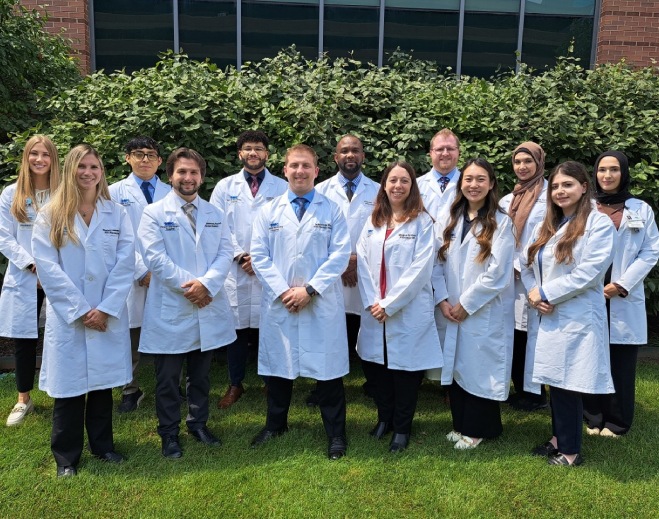
Left to Right, back row: Megan Foster, Juan Esquivel, London Umejiaku, Obioma Opara, Joseph Champoux, Ruba Alagha, Shahada Altaii
Left to Right, front row: Elizabeth Lemanske, Justin Zimmerman, Zackary Kujat, Megan Irvine, Katrina Hoang, Hilary Mansoor
Past Residents
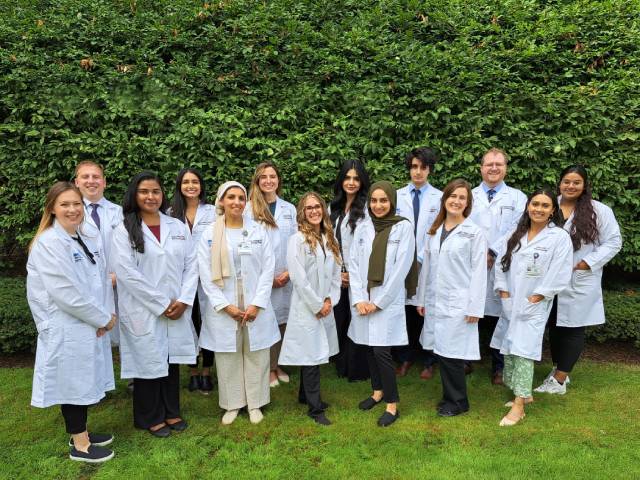
Left to Right, back row: Zackery Kujat, Hinal Patel, Paige Hanke, Khola Gulzar, Andrew Matlob, Joseph Champoux, Theres Sajan
Left to Right, front row: Madison Smith, Sruthi Thomas, Maisaa Abudagga, Jacklyn Fleury, Leena Ahsan, Taylor Wisdom, Zara Ali
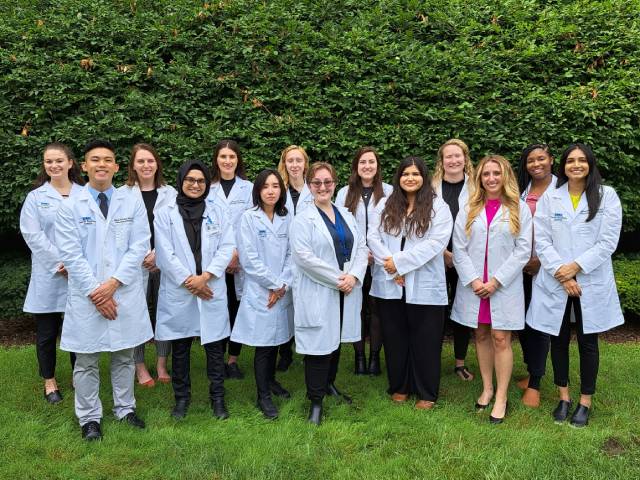
Left to Right, back row: Jacqueline Muscat, Megan Brooks, Stefania Cian, Hayden Cesarz, Krista Kozoro, Sarah Harris, Rebecca Augustin
Left to Right, front row: Anthony Huang, Amima Mahmood, Uyen Phan, Natalie Gaines, Allison Johnson, Erica Padgett, Hinal Patel
.jpeg?sfvrsn=7a07bda7_1 "resized-pharmacy-resident-photo (1)")
Left to Right, back row: Jacob Pifer, Spencer Graczyk, Andrew Barbish, Stefania Cian, Nikolas Kipreos, Sarah Harris, Megan Brooks, Alex Huang
Left to Right, front row: Kaitlin Assaad, Ali Olayan, Allison Spitery, Molly Bray, Reem Aljanabi, Rachel Kuo

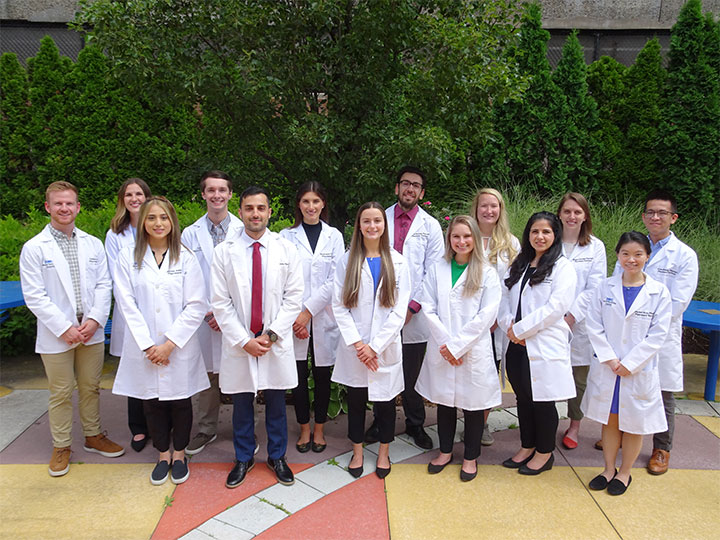
Left to Right, back row: Katherine Dada, Nadya Al-Hadidi, Denise Lamm, William Sassack, Megan Romain, Rylie Martin, Alex Huang Left to Right, front row: Heba Saleem, Kevin Ng, Kristine Mercado, Adalah Yahia, Amina Ammar, Rachel Kuo, Laura Postlmayr, Molly Bray Not Pictured: Jessica Leon, Kristina Khaireddine
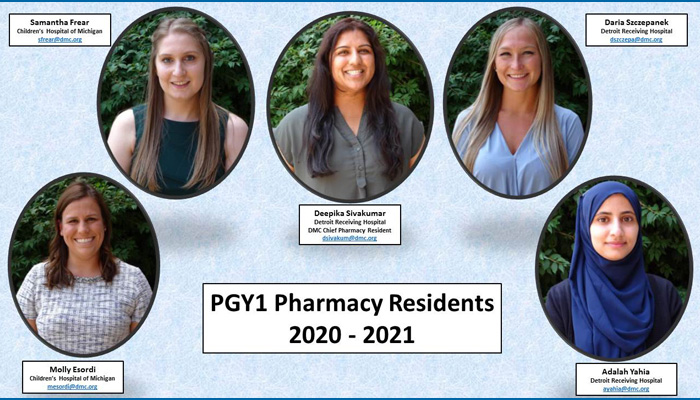
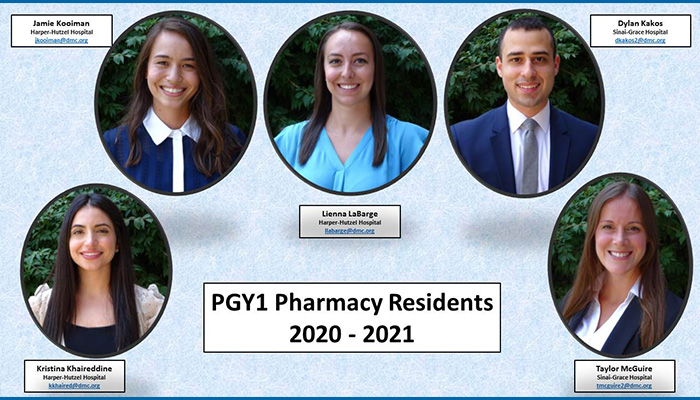
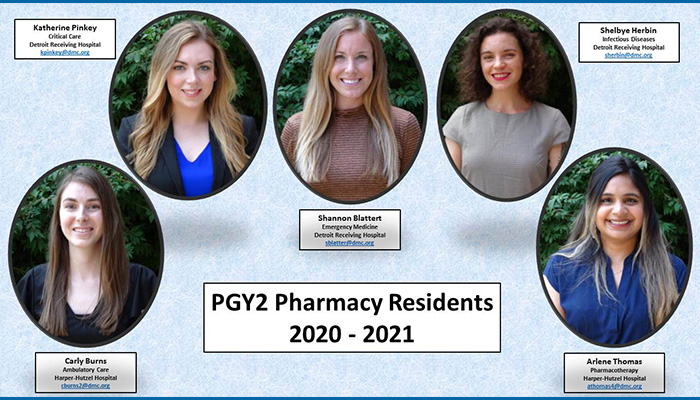
1d557deda4f163eda0bfff0f00ed1b39.jpg?sfvrsn=e63a6c3f_1 "dmcpharmacyresidentscurrent2019-min-(2)1d557deda4f163eda0bfff0f00ed1b39")
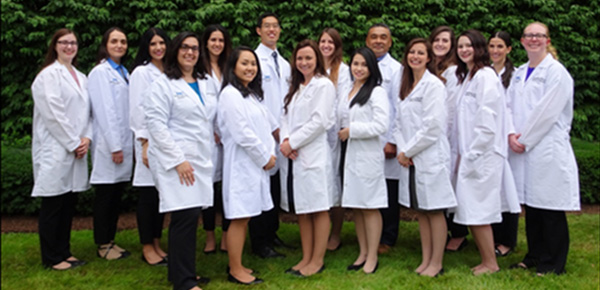
Left to right: Ashley Taylor, Melanie Jaeger, Maggie Faraj, Diana Michaels, Shannon Blattert, Nicole El-Sayah, Katherine Pinkey, Rachel Ives, Sana Cheema, Selena Warminski, Brooke Collins, Shelbye Herbin, Maggie Cooper, Dorothy Caramagno, Victoria Oyewole, Jordan Wilson
The Residency Steering Committee (RSC) serves as an oversight committee to all DMC residency programs. The goals of the RSC are to maintain ASHP accreditation, preserve a consistent residency practice model among all sites, award residency certification to each resident achieving expectations of their residency program, and strive for national recognition for all programs. The committee meets at least 6 times per year and is comprised of the residency program directors and coordinators, directors of pharmacy, and the chief pharmacy resident. The chief resident is selected through an interview process each year from among the resident class and is the spokesperson for the residents at the meetings.
PGY2 Ambulatory Care
Maggie Faraj, Pharm.D.
Harper-Hutzel Hospital
Email: [email protected]
Dr. Maggie Faraj completed her undergraduate studies and obtained her Doctorate of Pharmacy at Wayne State University. Upon graduation, she completed her PGY1 residency at Harper-Hutzel Hospital and went on to further her career at the DMC by staying on as the PGY2 Ambulatory Care Resident. During her PGY-2 residency, her research will focus on implementing and evaluating the impact of a pharmacist-led heart failure clinic at the DMC on the 30- and 90- day hospital readmission rates. Her practice interests include cardiology, diabetes, and transitions of care. After completion of her PGY2, Dr. Faraj hopes to become board certified in ambulatory care and obtain a clinical pharmacy specialist position providing chronic disease management at an urban institution while integrating teaching and research into her career.
PGY2 Critical Care
Victoria Oyewole, Pharm.D.
Detroit Receiving Hospital
Email: [email protected]
Dr. Victoria Oyewole completed her BA in Biology from the University of Minnesota in 2013. Victoria ventured east and received her PharmD at the University of Charleston in 2018. Victoria then completed her PGY1 Pharmacy Residency at St. Joseph Medical Center in Tacoma, WA. She was attracted to Detroit Receiving’s diverse patient mix and progressive pharmacy practice. Her interests include critical care, emergency medicine, research, and leadership. She is dedicated to tackling the complex challenges faced in the inpatient care setting and gaining unique experiences that will allow her to practice at the top of her license. Victoria’s PGY2 research project will explore the impact of methadone use for weaning patients on prolonged opioid infusions in the ICU, especially those with a history of opioid dependency or illicit IV drug use. Once she is finished with her PGY2, Victoria would like to secure a position as a Critical Care specialist at a tertiary referral hospital, mentor future pharmacists and conduct research addressing the healthcare gaps for critically ill patients.
PGY2 Emergency Medicine
Melanie Jaeger, Pharm.D.Detroit Receiving Hospital
Email: [email protected]
Dr. Jaeger graduated from the University Of Tennessee College Of Pharmacy in 2018, however her SEC allegiance lies with her undergrad alma mater Auburn. Before moving to Detroit, Melanie completed her PGY1 Pharmacy Residency at University Health System in San Antonio, TX. Melanie’s career goal is to be an Emergency Medicine Pharmacy Specialist at an academic medical center, ideally a safety net hospital serving the underserved. Her practice interests include ketamine for sedation, anticoagulation reversal, and ischemic stroke.
PGY2 Pharmacotherapy
Rachel Ives, Pharm.D.
Harper-Hutzel Hospital
Email: [email protected]
Dr. Rachel Ives completed her undergraduate degree at Colorado State University, her Doctor of Pharmacy Degree at the University of Michigan, and her PGY1 pharmacy residency at Harper-Hutzel Hospital. Her long term career goal is to be a clinical pharmacist specialist. She would like to split her clinical work between an internal medicine service and an ambulatory care clinic specializing in either cardiology or HIV. Additionally, she hopes to serve as a preceptor to pharmacy students and residents and be involved in advancing pharmacy-based clinical services.
Welcome to Detroit and Southeast Michigan!
The central campus of the DMC is located in the heart of Detroit. Here, on Wayne State University's Medical Campus, four DMC institutions (Detroit Receiving Hospital, Harper Hospital, Children’s Hospital of Michigan, and the Rehabilitation Institute of Michigan, are bordered by the University's Medical School (Scott Hall) and the Shiffman Medical Library on one end, and the WSU College of Pharmacy and Health Sciences on the other. Just one block up the street are two more DMC institutions, Hutzel Hospital and the Kresge Eye Institute.
Nearby are theaters, restaurants, stadiums, clubs, and the waterfront. The Motor City, as you would expect, has an extensive freeway system that allows quick access to the suburbs and surrounding counties. The beautifully restored Fox Theater, along with the Gem Theater and Second City are nearby, as are the Fisher Theater and WSU's Hillberry and Bonstelle Theaters for the performing arts. The DMC shares office space with the world-class Detroit Symphony Orchestra at Orchestra Place and employees often receive special discounts on DSO performances and other events. Other nearby attractions not to be missed include the Detroit Institute of Arts (the fifth largest art museum in the country), the Museum of African-American History and the recently restored Michigan Opera Theater. Also within walking distance are the Detroit Historical Museum, the Detroit Public Library, and the Detroit Science Center. In the nearby city of Dearborn is the Henry Ford Museum and Greenfield Village, the largest indoor/outdoor museum complex in the country.
If you enjoy sports, Michigan has it all - from amateur and professional teams to individual outdoor sports and recreation. Near the DMC's Central Campus is Comerica Park, the home of the Detroit Tigers baseball team, Ford Field (home of the Detroit Lions). A short distance away the new Little Caesars Arena, the home of the Detroit Red Wings hockey team and Detroit Pistons.
For those who desire a more hands on approach to recreation, Michigan offers up marathons, sailing, boating, cycling tours and races, hiking, camping, hunting, fishing, snowmobiling, cross-country skiing, tennis tournaments, and some of the most beautiful golf courses in the world.
If none of the above interest you - there's always the new casinos...
Please choose the following links to learn more about Detroit and southeastern Michigan.
To find out about housing options in the Detroit Area, check out: http://www.virtualrelocation.com
Other Places for Detroit Information
http://www.detroitmi.gov - The official City of Detroit Web Site
http://detnews.com - The Detroit News on-line
http://www.areavibes.com
Pharmacy Residency Program Information
| PGY1 Pharmacy | PGY2 Ambulatory | PGY2 Critical Care |
Application Deadline: January 2 Interview Required: Yes Any questions, please contact: Detroit Receiving Hospital Harper-Hutzel Hospital Sinai-Grace Hospital This one year pharmacy residency program will be conducted in accordance with the American Society of Health-System Pharmacists (ASHP) accreditation standard for PGY1 Pharmacy Residency Training. | Application Deadline: First week of January Any questions regarding the program, please contact Program DirectorCandice Garwood, Pharm.D., FCCP, BCPS, BCACP Clinical Pharmacy Specialist - Ambulatory Care Clinical Professor of Pharmacy, Wayne State University PGY-2 Ambulatory Care Residency Program Director Harper-Hutzel Hospital Pharmacy Department 3990 John R Detroit, MI 48201 Phone: (313) 966-7883 Fax: (313) 745-1628 Email: [email protected] Matched Program: Yes Number of positions: 1 Interview required: Yes This 1 year ambulatory care residency will be conducted in accordance with the American Society of Health-System Pharmacists (ASHP) accreditation standard for Ambulatory Care Pharmacy Residency Training. | Application Deadline: First week of January Any questions regarding the program, please contact Program Director Adalah Yahia, PharmD, BCCCP |
| PGY2 Emergency | PGY2 Infectious | |
Application Deadline: First week of January Any questions regarding the program, please contact Program DirectorRachel Wein, PharmD, BCPS Clinical Pharmacist Specialist – Emergency Medicine Program Director, PGY-2 Emergency Medicine Pharmacy Residency Detroit Receiving Hospital Pharmacy Department 4201 St. Antoine Blvd. Detroit, MI 48201 Phone: 313-966-8087 Email: [email protected] Matched Program: Yes Number of positions: 1 Interview required: Yes This one year emergency medicine residency will be conducted in accordance with the American Society of Health-System Pharmacists (ASHP) Educational Outcomes, Goals, and Objectives for Postgraduate Year Two (PGY2) Pharmacy Residency in Emergency Medicine. | Application Deadline: First week of January Any questions regarding the program, please contact Program Director Marco R. Scipione, PharmD, BCPS (AQ-ID) Program Director, PGY2 Infectious Diseases Detroit Receiving Hospital and University Health Center 4201 St. Antoine Blvd, UCH 3H-4Detroit, MI 48201 Email: [email protected] Matched Program: Yes Number of Positions: 1 Interview Required: Yes This one year infectious diseases residency will be conducted in accordance with the American Society of Health-System Pharmacists (ASHP) accreditation standard for Infectious Diseases Pharmacy Residency Training. |
| PGY1 Pharmacy | PGY2 Ambulatory | PGY2 Critical Care |
|
|
|
| PGY2 Emergency | PGY2 Infectious | |
|
|
| PGY1 Pharmacy | PGY2 Ambulatory | PGY2 Critical Care |
|
| |
| PGY2 Emergency | PGY2 Infectious | |
|
|
Employee benefits are included per Detroit Medical Center policy.
Financial Support: Time spent attending mandatory meetings is paid. At this time financial support to cover costs for registration and hotel stay to attend ASHP Midyear Clinical Meeting (PGY1) or specialty meeting (PGY2), and a Regional Pharmacy Resident Conference is provided. See DMC Resident Reimbursement Procedure for additional information.
Resident Resources: Resources available to residents include:
- An area in which to work, that is safe and conducive to concentrating without frequent interruptions. This may be an office, workstation, and/or desk space.
- Access to a computer, appropriate technology (clinical information systems, databases, and references), and equipment necessary to perform work functions to allow residents to fulfill program responsibilities
| PGY1 Pharmacy | PGY2 Ambulatory | PGY2 Critical Care |
|
| |
| PGY2 Emergency | PGY2 Infectious | |
|
|
| PGY1 Pharmacy | PGY2 Ambulatory | PGY2 Critical Care |
|
| |
| PGY2 Emergency | PGY2 Infectious | |
|
|
| PGY1 Pharmacy | PGY2 Ambulatory | PGY2 Critical Care |
Teaching Certificate Program Available through the Wayne State University Eugene Applebaum College of Pharmacy and Health Sciences as a longitudinal program conducted throughout the residency year |
|
|
| PGY2 Emergency | PGY2 Infectious | |
|
|
| PGY1 Pharmacy | PGY2 Ambulatory | PGY2 Critical Care |
See PGY1 electives in Required Learning Tab |
|
|
| PGY2 Emergency | PGY2 Infectious | |
|
|
| PGY1 Pharmacy | PGY2 Ambulatory | PGY2 Critical Care |
| Harper-Hutzel Hospital | Detroit Receiving Hospital |
| PGY2 Emergency | PGY2 Infectious | |
| Detroit Receiving Hospital | Detroit Receiving Hospital |
PGY1
Learning Experiences
At a minimum, core learning experiences are defined as follows: orientation, pharmacy administration, medication use management, infectious diseases, research, one critical care, and either internal medicine or general pediatrics. In addition, 75% of the residency year must be completed at the matched site, so required learning experiences may vary slightly depending on the site. Residents must spend two thirds or more of the program in direct patient care activities, i.e. at least 8 one month or 32 weeks of 6 week long learning experiences, and no more than one-third may deal with a specific disease state and patient population (e.g. critical care, ambulatory care, infectious diseases). All PGY1 residents are required to complete at least one learning experience at an alternate DMC site.
| Children’s Hospital of Michigan | Detroit Receiving Hospital | Harper-Hutzel Hospital | Sinai-Grace Hospital |
|
|
|
|
| PGY2 Ambulatory | PGY2 Critical Care |
|
|
| PGY2 Emergency | PGY2 Infectious |
|
|
| PGY1 Pharmacy | PGY2 Ambulatory | PGY2 Critical Care |
|
|
|
| PGY2 Emergency | PGY2 Infectious | |
|
|